Foundation · Writing · Free Printable
Retelling: Story Sequencing
Sequence and retell a simple story using beginning, middle and end structure.
Worksheet Preview
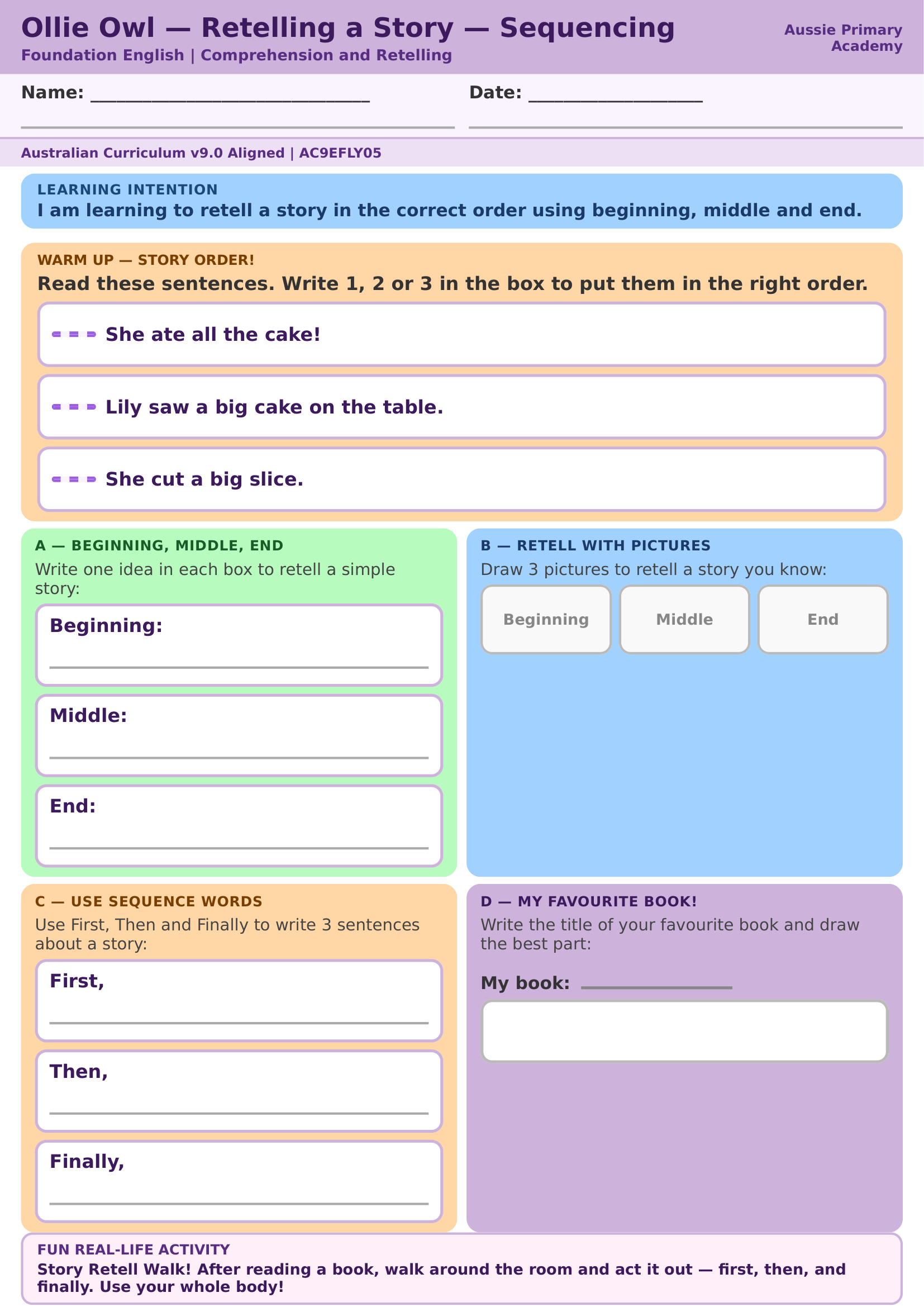
Learning Intention
Students sequence and retell a simple story using a clear beginning, middle and end.
Australian Curriculum
Supports Foundation English learning. (AC9EFLY05)
Skills Practised
- Sequencing events
- Oral retelling
- Beginning, middle and end
About This Worksheet
Sequencing helps children understand that stories and events happen in an order. Retelling also gives children practice selecting important details and expressing them clearly using their own words.
How to Use It
Read or tell a short familiar story together. Talk about what happened first, next and last before completing the worksheet. Ask the child to describe each part aloud, then draw or write the key events. Encourage simple sequence words such as first, next, then and finally.
Parent Tip
Use everyday routines for extra practice. Ask your child to retell how they got ready for school or made a snack, using three steps in the correct order.